Christina Rossetti's "Up-Hill." George Herbert's "Love (III)" and Herbert's other poems at Toronto's site.
Christina Rossetti's set of poems at Toronto's site.
D. G. Rossetti, "Dante's Dream" (1856) at the Tate. D.G.Rossetti, "Dantis Amor" ("Dante's Vision of Love," 1860), a panel. DGR's "Blessed Damozel" (1875-78), at the Fogg.
One of DGR's engraved illustrations for "Goblin Market" (1862).
Victorian Web's Christina Rossetti page.
Christina Rossetti and her mother.
Swinburne's "Hymn to Proserpine." More Swinburne from Toronto.
The Louvre hermaphrodite. A closer view.
A fully searchable online Swinburne from Indiana University.
Dante Gabriel Rossetti's painting "Proserpine" (1874) at the Tate.
Wednesday, March 12, 2014


Tuesday, March 11, 2014
Robert Browning
From Toronto, poems by Robert Browning, among them "Andrea del Sarto" and "Fra Lippo Lippi."
A map of Florence in 1493. Modern Florence, a tourist view.
Find paintings at ArtStor (Harvard login required); for Fra Lippo Lippi (Fillippino or Fillippo Lippi), search only for "Lippi."
Giotto's Presentation of the Virgin (1305); Giotto's Deposition; Fra Angelico's Annunciation (1430?).
Fra Lippi's Madonna and Child (1445; in Florence, where Robert Browning would likely have seen it). Lippi's Disputation, in Santa Maria del Carmine, Florence.
Lippi's Coronation (described in the poem).
The Victorian Web collective annotates "Fra Lippo Lippi."
Paintings by Andrea del Sarto (Andrea d'Agnolo) via ArtStor (Harvard login required).
The central figure from Andrea's Madonna of the Harpies (1517). The Madonna of the Harpies seen entire.
Andrea's Holy Family. An Annunciation (1528). Andrea's Madonna della Scala now in the Prado.
All of Vasari's Lives, trans. Gaston DeVere. Vasari's Life of Andrea del Sarto and his Life of Lippi and Botticelli(translator uncredited, but it's DeVere).
A map of Florence in 1493. Modern Florence, a tourist view.


Find paintings at ArtStor (Harvard login required); for Fra Lippo Lippi (Fillippino or Fillippo Lippi), search only for "Lippi."
Giotto's Presentation of the Virgin (1305); Giotto's Deposition; Fra Angelico's Annunciation (1430?).


Fra Lippi's Madonna and Child (1445; in Florence, where Robert Browning would likely have seen it). Lippi's Disputation, in Santa Maria del Carmine, Florence.


Lippi's Coronation (described in the poem).

The Victorian Web collective annotates "Fra Lippo Lippi."
Paintings by Andrea del Sarto (Andrea d'Agnolo) via ArtStor (Harvard login required).
The central figure from Andrea's Madonna of the Harpies (1517). The Madonna of the Harpies seen entire.


Andrea's Holy Family. An Annunciation (1528). Andrea's Madonna della Scala now in the Prado.


All of Vasari's Lives, trans. Gaston DeVere. Vasari's Life of Andrea del Sarto and his Life of Lippi and Botticelli(translator uncredited, but it's DeVere).
Monday, March 3, 2014
Ruskin and Tennyson and other Victorians
A mirror and a lamp.
Another similar pair, with a simple diagram.
A cornucopia of pictures and excerpts w/r/t Ruskin and the visual arts. (h/t Victorian Web)
Lots of Tennyson at the Toronto site, including "Locksley Hall," the sequel to "Locksley Hall" (in the same remarkable meter), "Ulysses," and "Tithonus."
Also from Toronto: the entirety of In Memoriam.
From Britain's National Portrait Gallery, F. L. Chantrey's sketch of A. H. Hallam.
From the collections of the Victoria and Albert Museum-- a great place to look for almost anything about the applied and decorative arts in Britain, in any period-- Victorian mourning fabric.
From Victorian Web: the Tennyson home page, and the Arnold page, and the E. B. Browning page, and the recently revised Emily Brontë page.
One of many photographs of Tennyson.
Emily Brontë's "No coward soul" in the Toronto version (with punctuation made regular, as she might have done had she prepared it for printing; Norton gives exactly what she wrote). And "Remembrance."
Arnold's "To Marguerite, Continued," and its less than subtle prequel (note the last lines). Arnold's "Dover Beach."
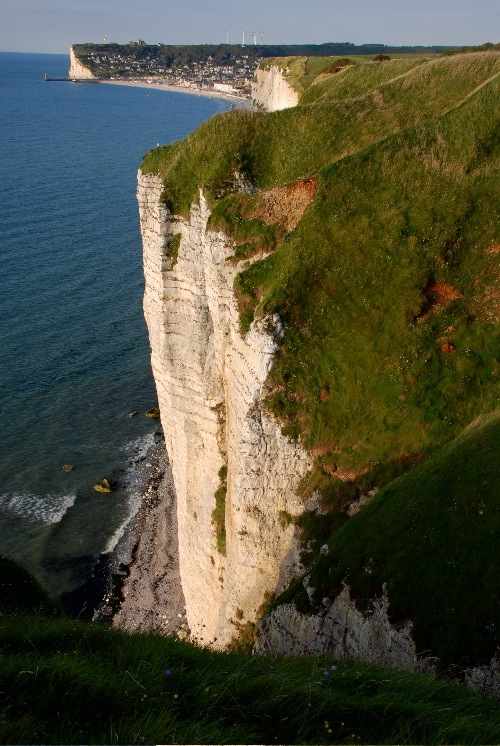
Looking at Dover: the famous cliffs; the tumultuous sea and shore.
Mill's "What Is Poetry?" a.k.a. "Thoughts on Poetry and Its Varieties" (1833) in an awkward but well-edited version and in another.
Elizabeth Barrett Browning's Sonnets from the Portuguese, in electronic full text (requires Harvard login).
Turner's slave ship, at the MFA, and Turner's Burning of the Houses of Parliament (one of two paintings by that title.
One of the versions of Fitzgerald's Rubaiyyat in a complete (if unattractive) online text from Cornell.
A fun, multilingual, and informative, though very much nonacademic, Omar Khayyam fan site, with comparisons between the Persian (in Persian script) of Omar, literal translations into English and other European languages, and FitzGerald's adaptations.


Another similar pair, with a simple diagram.

A cornucopia of pictures and excerpts w/r/t Ruskin and the visual arts. (h/t Victorian Web)
Lots of Tennyson at the Toronto site, including "Locksley Hall," the sequel to "Locksley Hall" (in the same remarkable meter), "Ulysses," and "Tithonus."
Also from Toronto: the entirety of In Memoriam.
From Britain's National Portrait Gallery, F. L. Chantrey's sketch of A. H. Hallam.
From the collections of the Victoria and Albert Museum-- a great place to look for almost anything about the applied and decorative arts in Britain, in any period-- Victorian mourning fabric.
From Victorian Web: the Tennyson home page, and the Arnold page, and the E. B. Browning page, and the recently revised Emily Brontë page.
One of many photographs of Tennyson.

Emily Brontë's "No coward soul" in the Toronto version (with punctuation made regular, as she might have done had she prepared it for printing; Norton gives exactly what she wrote). And "Remembrance."
Arnold's "To Marguerite, Continued," and its less than subtle prequel (note the last lines). Arnold's "Dover Beach."
Looking at Dover: the famous cliffs; the tumultuous sea and shore.

Mill's "What Is Poetry?" a.k.a. "Thoughts on Poetry and Its Varieties" (1833) in an awkward but well-edited version and in another.
Elizabeth Barrett Browning's Sonnets from the Portuguese, in electronic full text (requires Harvard login).
Turner's slave ship, at the MFA, and Turner's Burning of the Houses of Parliament (one of two paintings by that title.

One of the versions of Fitzgerald's Rubaiyyat in a complete (if unattractive) online text from Cornell.
A fun, multilingual, and informative, though very much nonacademic, Omar Khayyam fan site, with comparisons between the Persian (in Persian script) of Omar, literal translations into English and other European languages, and FitzGerald's adaptations.
Tuesday, February 25, 2014
Keats and Austen
From Toronto: all the Keats poems; the sonnet on the Elgin Marbles; the Urn; the sonnet on the four seasons; the ode called "To Autumn."
The British Museum's public information on the Elgin Marbles and the broader set of pieces from the Parthenon.
A few of those pieces: a sacrificial procession (with cow); horsemen.
Two sonnets by John Milton important to Keats' thinking about the sonnet as a form and about his own poetic career.
A meaning Keats could not have intended in "To Autumn," and yet an analogy for one of his lyric goals.
The only certainly authenticated sketch of Jane Austen, by Cassandra Austen (1810).
A nonacademic but comprehensive e-resource center for the study of Austen, including a quick biography.
The Cobb at Lyme, in a modern photograph. The stairs from which Louisa jumps.
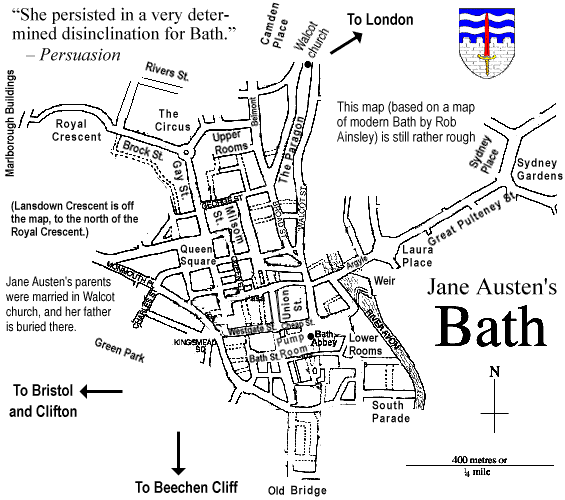
An oddly placemat-like annotated map of Jane Austen's Bath. A proper map of Bath in her time (sans annotations).
The Jane Austen Society of North America, a helpful but nonacademic resource, and the Jane Austen Society of the UK, likewise.
The British Museum's public information on the Elgin Marbles and the broader set of pieces from the Parthenon.
A few of those pieces: a sacrificial procession (with cow); horsemen.


Two sonnets by John Milton important to Keats' thinking about the sonnet as a form and about his own poetic career.
A meaning Keats could not have intended in "To Autumn," and yet an analogy for one of his lyric goals.
The only certainly authenticated sketch of Jane Austen, by Cassandra Austen (1810).

A nonacademic but comprehensive e-resource center for the study of Austen, including a quick biography.
The Cobb at Lyme, in a modern photograph. The stairs from which Louisa jumps.


An oddly placemat-like annotated map of Jane Austen's Bath. A proper map of Bath in her time (sans annotations).

The Jane Austen Society of North America, a helpful but nonacademic resource, and the Jane Austen Society of the UK, likewise.
Monday, February 17, 2014
Wordsworth and Coleridge (2)
Wordsworth's two voices, and J. K. Stephen's 1891 parody.
Wordsworth and the Visible Man.
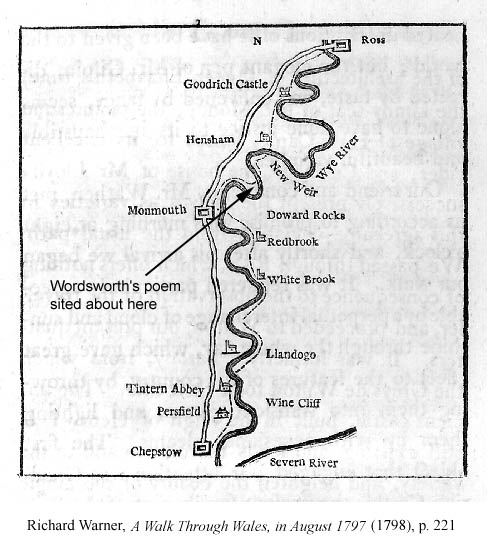
Once again, what Wordsworth would have seen "a few miles above Tintern Abbey," thanks to D. S. Miall: a modern-day view and the relevant plate from Samuel Ireland's Picturesque Views on the River Wye (1797), which describes Wordsworth's path. The Wye with sycamores (picture by Miall).
A very Wordsworthian picture (with two senses of "nature," if not many more).
Wordsworth's Immortality Ode.
An albatross.
Coleridge's "Dejection: An Ode."
The new moon with the old moon in her arms. John Constable's 1816 painting "Weymouth Bay."
All about the ballad "Sir Patrick Spens." Ewan MacColl's a cappella version; a well-known folk-rock version.
A modern copy of a 17th-c. Aeolian harp. Another Aeolian harp, by the modern Canadian instrument maker David Johnson, but not far from early 19th-c designs. The "Aeolian lyre" in Thomas Gray.
Wordsworth and the Visible Man.


Once again, what Wordsworth would have seen "a few miles above Tintern Abbey," thanks to D. S. Miall: a modern-day view and the relevant plate from Samuel Ireland's Picturesque Views on the River Wye (1797), which describes Wordsworth's path. The Wye with sycamores (picture by Miall).


A very Wordsworthian picture (with two senses of "nature," if not many more).

Wordsworth's Immortality Ode.
An albatross.

Coleridge's "Dejection: An Ode."
The new moon with the old moon in her arms. John Constable's 1816 painting "Weymouth Bay."


All about the ballad "Sir Patrick Spens." Ewan MacColl's a cappella version; a well-known folk-rock version.
A modern copy of a 17th-c. Aeolian harp. Another Aeolian harp, by the modern Canadian instrument maker David Johnson, but not far from early 19th-c designs. The "Aeolian lyre" in Thomas Gray.


Wednesday, February 12, 2014
Wordsworth and Coleridge (1)
The Wordsworth Centre.
A guide to the sprawling current standard academic edition of Wordsworth's poems, with brief descriptions of the major works.
One analogy, from another art form, for the effect of Lyrical Ballads.
Wordsworth as elderly sage, also as sage, and a pen-and-ink drawing of the poet young and worried.
Many images of Tintern Abbey and the Wye Valley from the Romantic period. Seen from across the River Wye right now.
But the poem takes place, the title says, "a few miles above" (i.e. upstream from) Tintern Abbey-- probably about here, according to David S. Miall's arresting scholarly argument about what Wordsworth actually describes. A relevant plate from Samuel Ireland's Picturesque Views on the River Wye (1797), which describes Wordsworth's path. The Wye with sycamores (picture by Miall).
Some of Wordsworth's manuscripts in electronic facsimile.
The Toronto online versions of some Wordsworth poems, including "Simon Lee" and the poem commonly known as "Tintern Abbey" and the Immortality Ode and the entirety of the first edition of Lyrical Ballads and the disturbing "Ode to Duty."
Dove Cottage and Rydal Mount. One tourist's view from Rydal Mount.
From UCSB, important events for the study of Romanticism, year by year.
From the University of Alberta, a set of resources for studying Coleridge's "Frost at Midnight": multiple online texts, with an earlier version, biographical and critical background, and the makings of an essay about Coleridge, childhood grief, and attachment theory.
A guide to the sprawling current standard academic edition of Wordsworth's poems, with brief descriptions of the major works.
One analogy, from another art form, for the effect of Lyrical Ballads.
Wordsworth as elderly sage, also as sage, and a pen-and-ink drawing of the poet young and worried.


Many images of Tintern Abbey and the Wye Valley from the Romantic period. Seen from across the River Wye right now.

But the poem takes place, the title says, "a few miles above" (i.e. upstream from) Tintern Abbey-- probably about here, according to David S. Miall's arresting scholarly argument about what Wordsworth actually describes. A relevant plate from Samuel Ireland's Picturesque Views on the River Wye (1797), which describes Wordsworth's path. The Wye with sycamores (picture by Miall).
Some of Wordsworth's manuscripts in electronic facsimile.
The Toronto online versions of some Wordsworth poems, including "Simon Lee" and the poem commonly known as "Tintern Abbey" and the Immortality Ode and the entirety of the first edition of Lyrical Ballads and the disturbing "Ode to Duty."
Dove Cottage and Rydal Mount. One tourist's view from Rydal Mount.

From UCSB, important events for the study of Romanticism, year by year.
From the University of Alberta, a set of resources for studying Coleridge's "Frost at Midnight": multiple online texts, with an earlier version, biographical and critical background, and the makings of an essay about Coleridge, childhood grief, and attachment theory.
Monday, February 10, 2014
Johnson and Blake
Jack Lynch's guide to online resources for Johnson.
The Plan (i.e. proposal) for Johnson's Dictionary.
Johnson's poem "On the Death of Dr. Robert Levet."
The Blake Archive.
The Blake Society.
A title page for Innocence and Experience (copy L).
A title page for Songs of Innocence.
A title page from another copy of Songs of Innocence.
One version of "The Little Black Boy"; page two from the same copy; page two from another copy (note the boys' colors in each).
One version of "The Lamb"; another version.
One version of "The Tyger"; another version.
"The Marriage of Heaven and Hell": one of many title pages.
Blake's works at Britain's Tate Gallery.
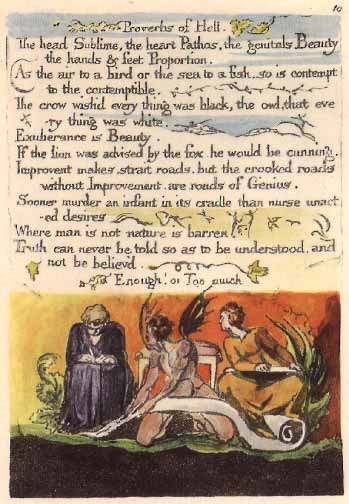
A beautiful (but amateur) online display of all the plates from one copy of The Marriage of Heaven and Hell. One plate from the Proverbs of Hell.
The Plan (i.e. proposal) for Johnson's Dictionary.
Johnson's poem "On the Death of Dr. Robert Levet."
The Blake Archive.
The Blake Society.
A title page for Innocence and Experience (copy L).

A title page for Songs of Innocence.

A title page from another copy of Songs of Innocence.

One version of "The Little Black Boy"; page two from the same copy; page two from another copy (note the boys' colors in each).


One version of "The Lamb"; another version.


One version of "The Tyger"; another version.


"The Marriage of Heaven and Hell": one of many title pages.

Blake's works at Britain's Tate Gallery.
A beautiful (but amateur) online display of all the plates from one copy of The Marriage of Heaven and Hell. One plate from the Proverbs of Hell.
Subscribe to:
Posts (Atom)